Salamis Ruins
📍 4WM9+JV2 Hasan Barboçolli Sk, Gazimağusa 99450
⭐ 4.8 / 5.0
Salamis was one of the most powerful and magnificent city-kingdoms of ancient Cyprus, serving as the island's principal city for over a millennium. Located on the eastern coast near modern-day Famagusta, this vast archaeological site sprawls across coastal scrubland and sandy terrain, offering visitors an extraordinary journey through Hellenistic, Roman, and Byzantine civilizations. It remains one of the largest and most impressive archaeological parks in the Eastern Mediterranean.
Founded according to legend by Teucer, son of Telamon of the Greek island of Salamis, following the Trojan War (traditionally dated to the 12th century BC), the city rose to prominence during the Archaic period. Under King Evagoras I (411–374 BC), Salamis became a beacon of Greek culture and briefly unified much of Cyprus. The city reached its architectural zenith during the Roman period, when it was renamed Augusta after being rebuilt following devastating earthquakes in 76 AD. Emperor Constantius II renamed it Constantia in the 4th century AD, and it served as the capital of Byzantine Cyprus until Arab raids in 647–648 AD led to its abandonment in favour of nearby Famagusta.
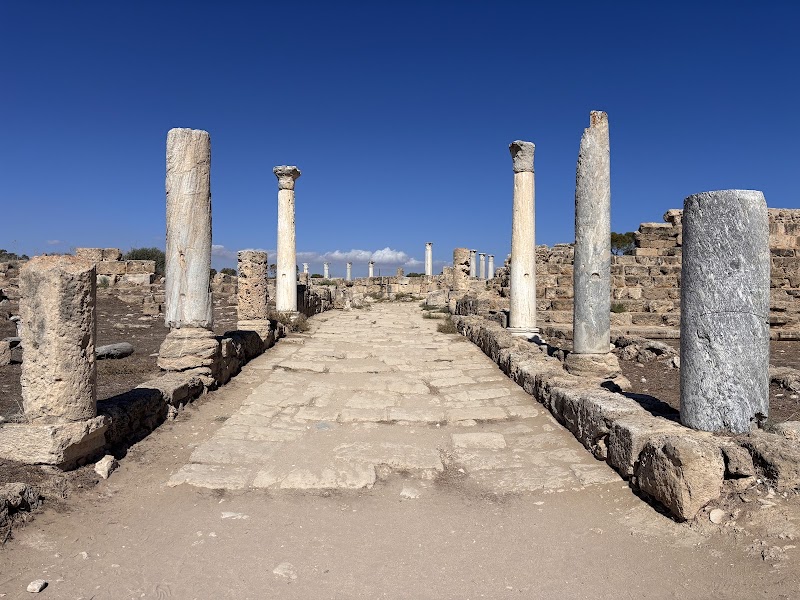
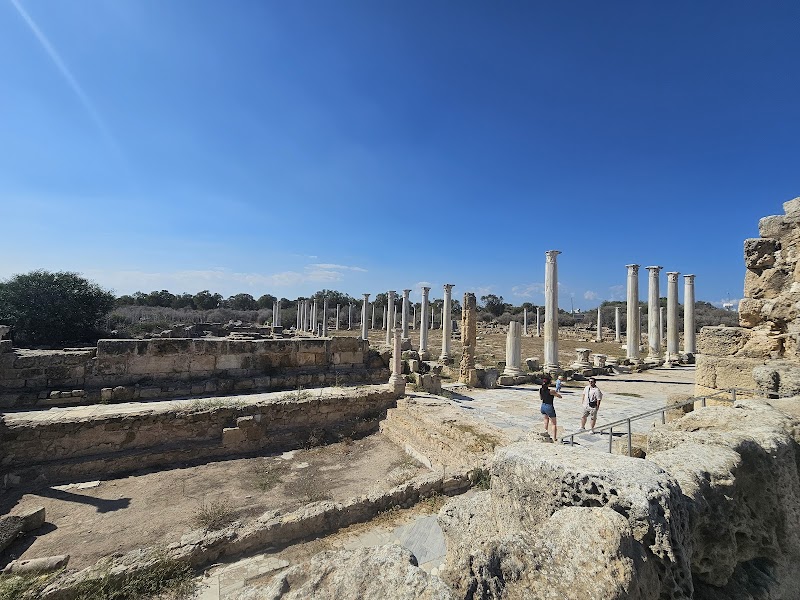
The gymnasium complex is the site's crown jewel — a vast colonnaded courtyard surrounded by re-erected marble columns, with adjoining Roman baths featuring elaborate mosaic floors, hypocaust heating systems, and sudatoria (steam rooms). The Roman theatre, originally built under Augustus and capable of seating 15,000 spectators, has been partially restored and hosts cultural events. Other highlights include the Agora (one of the largest Roman forums in the Mediterranean), the Temple of Zeus, an early Christian basilica (Kampanopetra), and the impressive Roman reservoir system.
Salamis is best visited in the cooler morning hours, as the site offers limited shade across its extensive grounds. Comfortable walking shoes are essential, and visitors should allow at least two to three hours to explore the main areas. The adjacent Royal Tombs necropolis, dating from the 8th–7th centuries BC, contains rock-cut chamber tombs where archaeologists discovered evidence of Homeric-style funeral rites, including sacrificed horses and chariots.
Key facts: Founded c. 12th century BC · Capital of Cyprus for over 1,000 years · Roman theatre seats 15,000 · One of the largest archaeological sites in the Mediterranean · Destroyed by earthquakes 332 & 342 AD · Adjacent Royal Tombs date to 8th–7th century BC
Founded according to legend by Teucer, son of Telamon of the Greek island of Salamis, following the Trojan War (traditionally dated to the 12th century BC), the city rose to prominence during the Archaic period. Under King Evagoras I (411–374 BC), Salamis became a beacon of Greek culture and briefly unified much of Cyprus. The city reached its architectural zenith during the Roman period, when it was renamed Augusta after being rebuilt following devastating earthquakes in 76 AD. Emperor Constantius II renamed it Constantia in the 4th century AD, and it served as the capital of Byzantine Cyprus until Arab raids in 647–648 AD led to its abandonment in favour of nearby Famagusta.
The gymnasium complex is the site's crown jewel — a vast colonnaded courtyard surrounded by re-erected marble columns, with adjoining Roman baths featuring elaborate mosaic floors, hypocaust heating systems, and sudatoria (steam rooms). The Roman theatre, originally built under Augustus and capable of seating 15,000 spectators, has been partially restored and hosts cultural events. Other highlights include the Agora (one of the largest Roman forums in the Mediterranean), the Temple of Zeus, an early Christian basilica (Kampanopetra), and the impressive Roman reservoir system.
Salamis is best visited in the cooler morning hours, as the site offers limited shade across its extensive grounds. Comfortable walking shoes are essential, and visitors should allow at least two to three hours to explore the main areas. The adjacent Royal Tombs necropolis, dating from the 8th–7th centuries BC, contains rock-cut chamber tombs where archaeologists discovered evidence of Homeric-style funeral rites, including sacrificed horses and chariots.
Key facts: Founded c. 12th century BC · Capital of Cyprus for over 1,000 years · Roman theatre seats 15,000 · One of the largest archaeological sites in the Mediterranean · Destroyed by earthquakes 332 & 342 AD · Adjacent Royal Tombs date to 8th–7th century BC
Bilgiler
Adres
4WM9+JV2 Hasan Barboçolli Sk, Gazimağusa 99450
Telefon
Fiyat Aralığı
$$